The Literature of Emilia-Romagna
Wendy reviews books set in Italy. For more articles like this one, subscribe to her Substack channel Italy Writers and get in touch via Sunflower Publishing.
Every region of Italy has a shelf of its own, and Emilia-Romagna’s is among the richest. This week’s stop on my journey through Italy’s twenty regions, one book, one dish and one porticoed avenue at a time, takes me north, to the stretch of land between the Apennines and the Po.
Emilia-Romagna runs from the mountains to the river plain, and its capital, Bologna, wears its history openly. An eleventh-century university still shapes the rhythm of the city, its porticos shelter centuries of foot traffic, and Ravenna’s Byzantine mosaics glow along the Adriatic coast a short drive east.
Why Writers Return to Emilia-Romagna
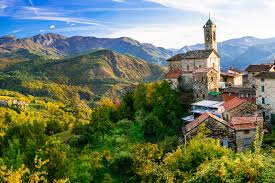


This combination of scholarship, faith and appetite has proved fertile ground for storytellers.
The land itself does much of the work. Fog settles low over the Bassa, that flat stretch of the Po Valley, while the Apennine foothills rise close behind it, and both have carried the weight of unease and reckoning in fiction long before Niccolò Ammaniti set I’m Not Scared among them. History adds its own pressure. Fascism and war moved through Emilia-Romagna’s factories and farmland in ways still felt decades later, and Giorgio Bassani turned to Ferrara to trace what that meant for its Jewish community, nowhere more precisely than in The Garden of the Finzi-Continis. And then there is the region’s appetite for life, which writers put to work as readily as its landscape and its history. Tom Benjamin, whose Daniel Leicester novels move through Bologna’s medieval streets, sets crime directly against the city’s food culture, each sharpening the other.
With the setting established, here are six books worth taking home.
Almost Blue
by Carlo Lucarelli
Bologna’s students are being hunted by a killer the police cannot find. Detective Grazia Negro, new to the case and determined to prove herself, has one witness in her corner, a blind man named Simone. He fills his days with Elvis Costello records and the city’s own radio chatter, building a picture of strangers from nothing but the sound of their voices. That habit gives him an ear sharp enough to catch something in the killer’s own voice, something that sets off every instinct he has.
Lucarelli tells the story from both sides, moving between Simone’s quiet, private world and the mind of a killer who remakes himself in the image of each new victim, chasing an escape from something that will not let him go. The result holds its tension until the final page, and the villain, drawn with real skill, is as compelling as anyone chasing him.
The Lost Boy of Bologna
by Francesca Scanacapra
Bologna, 1929. A young, unmarried mother, certain her newborn son has died and certain the fault is hers, leaves him behind, carrying that belief for the rest of her life. A stranger’s kindness saves the child, and so begins the long, eventful life of Rinaldo Scamorza.
Years in an orphanage leave Rinaldo hoping his mother will return for him. Instead, he is placed with a foster mother who treats the children in her care as income rather than family. Amid that hardness, he finds Evelina, a fellow orphan, and the two build a bond that carries them both. When Evelina is sold into prostitution at thirteen, Rinaldo’s world narrows to the single aim of finding her again, a search that later brings them briefly together before circumstance pulls them apart once more.
As Bologna rebuilds after the war and its economy finds new life, Rinaldo draws on everything the city has taught him to build something of his own. Through every turn, the two women he has never stopped thinking of, Evelina and his mother, remain close to the surface. Scanacapra writes with real feeling for the period, and the historical detail sits naturally within the story rather than beside it.
The Surgeon’s Daughter
by Audrey Blake
Nora Beady is the only woman studying medicine at a leading Bologna school, in a century that expected women to stay home and raise families rather than train as surgeons. Her ambition draws hostility from nearly every man around her, and it is only when she finds an ally in Magdalena Morenco, the school’s sole female doctor, that her work gains real direction.
Together, the two women refine techniques for the Caesarean section, then a dangerous and largely untested procedure. Their research is exacting, and the response from their male colleagues is often hostile, few are willing to trust findings produced by women, and many hold the power to deny their own wives proper care. Nora’s resolve is tested fully when she meets a patient who will die without the surgery. Success could change medicine for women everywhere. Failure would cost lives, her career and years of progress besides. Blake balances period detail with real narrative drive, and Nora’s determination carries the book from the first page.
The Broker
by John Grisham
In his last hours in office, an outgoing American President grants a pardon to Joel Backman, once one of Washington’s most powerful lobbyists, now six years into a federal prison sentence. The pardon looks like clemency. It is, in truth, the result of quiet, sustained pressure from the CIA.
Backman’s old dealings may have given him knowledge of the world’s most sophisticated satellite surveillance system, and the agency wants him alive and exposed rather than hidden away. A military flight carries him out of the country under a new name, and Bologna becomes his new home, its cafés and trains and the wider Emilia-Romagna countryside the setting for a stranger learning Italian from scratch. Once he is settled, the CIA quietly lets his location reach the Israelis, the Russians, the Chinese and the Saudis, then steps back to watch. Survival was never really the question. The question is who reaches him first. Grisham keeps the plot moving at real pace, and Bologna’s streets and stations give the chase a texture that lingers, readers regularly say the book sends them straight to Emilia-Romagna itself.
The Garden of the Finzi-Continis
by Giorgio Bassani
The Finzi-Continis are an aristocratic Jewish family, and their estate walls in Ferrara have held the narrator’s curiosity since boyhood. He is drawn especially to their two children, Alberto and Micol, though it is not until 1938, when he is twenty-two, that he is finally invited inside their private world, one that feels, for a while, untouched by Fascist Italy’s racial laws.
Writing thirteen years after the war, he retraces his complicated bond with the beautiful Micol, and with it, the fate awaiting Ferrara’s Jewish community as the decade closes in. Bassani’s prose carries real restraint, and that restraint is what makes the novel’s final chapters so quietly devastating. It remains one of the defining Italian novels of the twentieth century.
The Complete Little World of Don Camillo
by Giovanni Guareschi
These stories carry readers to the Valley of the River Po, Italy’s widest and most fertile plain, and introduce them to a cast built with real affection by their creator. At the centre stand the village priest, Don Camillo, and his rival, Peppone, the Communist mayor. A third party occasionally settles their disputes too, speaking down from the crucifix above the church altar.
Guareschi mixes love, fear, death and genuine warmth in equal measure, and the humour throughout is gentle rather than broad. These tales have entertained readers across generations, in print, on film, on radio and on television, and this edition stays faithful to the original manuscripts, with several stories appearing in English for the first time.
In the Kitchen
Emilia-Romagna is Italy’s culinary heartland, the birthplace of Parmigiano Reggiano, prosciutto di Parma and balsamic vinegar, and home to rich egg pastas, cured pork and slow-cooked sauces built up over generations. Bologna gave the world Tagliatelle al Ragù, often known abroad as spaghetti Bolognese, and Tortellini in Brodo, delicate pasta parcels served in a warm broth.
A handful of other dishes are worth seeking out. Piadina Romagnola, a thin flatbread cooked on a hot griddle, is folded around Prosciutto di Parma, soft squacquerone cheese and fresh rocket. Gnocco Fritto, puffed diamonds of fried dough, crisp outside and hollow within, arrive piping hot alongside cured meats such as prosciutto, culatello and mortadella. Cappelletti come stuffed with raviggiolo cheese, and Pisarei e fasò, Piacenza’s signature dish, is made by hand from stale bread and flour, finished with a sauce of beans, lard pesto, onion and tomato.


Regional Cookbooks
Bologna Mia by Loretta Paganini gathers ninety family recipes, each one tied to a memory from the author’s childhood kitchens. Paganini shares her paternal grandmother’s pasta, said to have won her grandfather’s affections through a particularly fine tortelloni, alongside her maternal grandmother’s technique and her mother’s award-winning pastries and tortes. Every recipe arrives with its story attached, which gives the book a warmth beyond the page count.
The Splendid Table, by Lynne Rossetto Kasper, was the first American book to give this region its due. Kasper travels from Parma to Bologna, Modena, Ravenna and Ferrara, into the small Apennine villages beyond, gathering history and folklore alongside genuinely useful cooking guidance. The dish names alone carry their own history, a seventeenth-century spring soup, a baked penne fit for a cardinal, a crumbling cake from Modena, hot caramelised pears with prosciutto, a red wine risotto with fresh rosemary, a pie of polenta and country ragù. Kasper makes each one feel within reach.
This article was adapted from my original review published on Italy Writers.