Navigate Italian bureaucracy
In addition to being an excellent read, this article may contain links promoting Amazon products we believe in. As an Amazon Associate, we earn from qualifying purchases. Read more.
Anyone who’s spent more than five minutes trying to navigate Italian bureaucracy knows it can feel like a dark comedy written by the gods of inefficiency. From endless paperwork to mind-boggling processes, the experience can leave you questioning not just the system but your very sanity. Fear not, for Italy’s literary greats have already been through it all—and they’ve written books that might just provide the dark comic relief and trauma therapy you need. Let’s dive into the ultimate reading list for anyone who’s ever grimaced and thought out loud, “Why is this taking so long?” at an Italian government office.
1. “The Leopard” – Change Without Change: The Ultimate Bureaucratic Gaslighting
In “Il Gattopardo”, Giuseppe Tomasi di Lampedusa shows us a world where everything changes, and yet nothing changes. Sound familiar? Trying to get anything done in the Italian system often feels like running in circles, only to end up back at square one. This novel will resonate with anyone who’s gone through the rigmarole of Italian bureaucracy, making you laugh (or cry) at the futility of it all.
Dark Comic Relief: Watch as Prince Fabrizio Salina’s world pretends to modernize while staying exactly the same, just like how you might upgrade to “online services” that still require you to submit forms in person.
Therapeutic Value: Acceptance. Lampedusa teaches you the first rule of surviving Italian bureaucracy: resign yourself to it.
Buy
2. “The Conformist” – Going Along to Get Along in Bureaucratic Hell
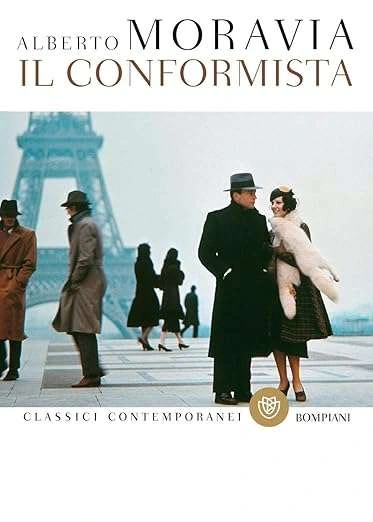
In “Il Conformista”, Alberto Moravia introduces us to Marcello Clerici, a man so eager to fit into the fascist bureaucracy that he sells his soul to the system. If you’ve ever thought, Maybe if I just follow their convoluted rules, everything will work out…, then you’ll relate to Marcello’s journey. Spoiler alert: It doesn’t work out. But the absurdity of his efforts will make you chuckle in recognition.
Dark Comic Relief: The harder Marcello tries to conform, the deeper he sinks into the black hole of inefficiency. It’s a hilarious reminder that, sometimes, trying to fit into the system only makes things worse.
Therapeutic Value: Empathy. You’re not the only one who’s tried to make sense of the madness—Marcello did, too, and boy, did he fail.
Buy
3. “The Day of the Owl” – Mafia or Bureaucracy? It’s Hard to Tell the Difference
Leonardo Sciascia’s “Il Giorno della Civetta” is a murder mystery where the real mystery isn’t the crime itself but how anyone expects justice to prevail in a system so broken. The novel reveals a world where the Mafia and the state are so intertwined that solving a crime is more about navigating corrupt officials than finding clues. If you’ve ever dealt with the maddening slowness of Italian authorities, this book will feel like a darkly comic version of your worst bureaucratic nightmare.
Dark Comic Relief: Watching detectives trying to work through layers of corruption and red tape feels eerily similar to getting your residency approved—except the criminals move faster.
Therapeutic Value: Catharsis. You’ll laugh (bitterly) at the realization that inefficiency in Italy has deep, historical roots. This isn’t just you. It’s everyone.
Buy
4. “Christ Stopped at Eboli” – Bureaucratic Black Holes and the Art of Letting Go

In “Cristo si è fermato a Eboli”, Carlo Levi paints a bleak picture of a government so detached from reality that it’s almost a comedy. Levi’s exile to the neglected south of Italy becomes a metaphor for anyone who’s been abandoned in the bureaucratic wilderness. If you’ve ever waited weeks for a simple form, Levi’s depiction of rural Italy—where even Christ himself stopped in despair—will give you a dark, knowing laugh.
Dark Comic Relief: Imagine Christ saying, “Nah, I’m not going that far south,” and you’ll get the gist of Italy’s bureaucratic efficiency. The government’s attitude? Even lazier.
Therapeutic Value: Solidarity. You’re not lost; the system is. And it has been for a very, very long time.
Buy
5. “That Awful Mess on Via Merulana” – Solving a Crime? Ha! Try Solving Italian Bureaucracy First
“Quer pasticciaccio brutto de via Merulana” by Carlo Emilio Gadda is a chaotic crime novel where the real culprit is the Italian justice system. The plot gets so tangled in bureaucratic red tape that by the end, solving the actual crime seems like an afterthought. You’ll recognize the absurdity if you’ve ever tried to get through to a government office, only to be sent from one desk to another, with no resolution in sight.
Dark Comic Relief: The police might as well just throw up their hands and say, “We give up.” The dysfunction is so deep that even the simplest tasks become impossible, much like trying to change your address in Italy.
Therapeutic Value: Relatability. Gadda’s novel will reassure you that losing your sanity is perfectly normal when dealing with Italian bureaucracy.
Buy
6. “La Casta” – The Exposé That’ll Make You Laugh (and Cry) for All the Wrong Reasons
In “La Casta”, Sergio Rizzo and Gian Antonio Stella offer a modern-day exposé of Italian political privilege and inefficiency. This non-fiction book reads like a dark comedy about a political class more interested in preserving their privileges than doing their jobs. If you’ve ever been baffled by the sheer wastefulness of Italian bureaucracy, this book will make you laugh in disbelief and cry in frustration.
Dark Comic Relief: Discover the ridiculous perks enjoyed by politicians while you struggle to get a simple document processed. You’ll be laughing… until you realize it’s all true.
Therapeutic Value: Outrage therapy. Sometimes, all you need is to vent your frustrations by reading about people who have it even worse than you.
Buy
Sanity is a Virtue
If you’re questioning your sanity after dealing with Italian bureaucracy, these books offer the perfect mix of dark humor and emotional therapy. You’ll find comfort in the fact that writers have been grappling with the absurdities of the Italian system for centuries—and somehow, they survived long enough to write about it. The next time you’re waiting (and waiting) for a document to be approved, crack open one of these novels in the queue. You might just find yourself laughing through the tears.