A Whirlwind of Wedding Traditions from Alps to Sicily
Imagine stepping into Italy with your best shoes on, thinking you’re ready for a calm and elegant weekend of romance, only to realise the wedding you’re attending feels more like a three-day festival curated by someone who thinks sleep is optional. You arrive thinking you know weddings. Italy proves you don’t. The country takes marriage celebrations to a level that borders on chaotic charm, the kind where you wonder whether you should have packed a helmet next to your dress shoes.
Wedding Customs Across the Boot
Up in the north, people begin the day with something called a breakfast aperitivo, which sounds innocent until you see what it involves. At eight in the morning, before the church bells even stretch their voices, you’ll find guests clinking glasses of prosecco like this is perfectly ordinary. Everyone looks strangely fresh, even though the day ahead involves enough eating and drinking to make seasoned partygoers rethink their life choices. The logic seems to be: if you start early, you can keep going forever.
By the time you wander into Tuscany, the mood shifts into something far more competitive. Here, couples take part in a tradition called cutting the log. Yes, a real log. Yes, a saw with two handles. The pair must slice through the chunk of wood together, smiling for photos while trying not to remove a finger. Locals love explaining that it symbolises teamwork. Outsiders often find themselves thinking it symbolises an early test of patience.
In other towns, the journey to the church becomes an obstacle course. Picture a mixture of village mischief and reality television. People set up small challenges along the road, each meant to represent hurdles the couple will overcome together. One minute the groom might be sweeping broken plates, the next he could be hoisting the bride over a makeshift barrier. The crowd cheers as though watching a sporting event. Someone’s aunt inevitably provides commentary.
Travel south and the energy shifts again. Down here, weddings stretch across whole weekends. Meals appear in endless cycles, relatives multiply unpredictably, and guests find themselves introduced to people who somehow claim to be cousins five times removed. Every region south of Rome seems convinced it must outdo the others. Bring stretchy trousers, because Nonna sees your full stomach as a challenge rather than a signal.
The History Behind the Madness
These lively traditions didn’t come out of nowhere. Many grew from ancient Roman customs or rural life, shaped over centuries by superstition, practicality, and the Italian instinct for celebration.
Take veils. Roman brides wore flame-toned veils to keep wicked spirits away. Modern brides keep the veil but switch the colour, shifting the old fear of ghosts into the more contemporary fear of judgemental in-laws.
That breakfast aperitivo? Once upon a time, weddings took place in the morning, followed by lunch. Guests fortified themselves early so they could stay alert long enough to survive hours of speeches and toasts. Italians simply held onto the early drinking while letting everything else evolve.
As for the Tuscan log tradition, it carries echoes of life in the countryside, when survival depended on both partners working side by side. The symbolism is sweet, even if the execution feels like a mini lumberjack competition.
The obstacle course for the newlyweds is a tradition with legs. It originated in northern Italy and spread southward. Common “obstacles” include the groom carrying the bride over a pile of plates (which he then has to clean up – a metaphor for marriage if I ever saw one), sawing a log together (again with the logs), or navigating a maze. In some regions, locals might block the road to the church with a white ribbon, only letting the couple pass after the groom pays a “ransom” – usually in the form of sweets or drinks for the crowd. It’s like a very festive toll road.
As for those marathon southern Italian weddings, well, that’s a tale of abundance and showing off. In the past, weddings were one of the few occasions where families could display their wealth and generosity. The longer the celebration, the more prestigious the family. This tradition intensified in the post-war years when increased prosperity allowed for more lavish celebrations. Now, it’s just an excuse to party for 48 hours straight.
Because why have a wedding day when you can have a wedding weekend?
But the history goes even deeper. The tradition of the bride wearing white? That’s relatively new, popularized by Queen Victoria in 1840. Before that, Italian brides wore green, symbolizing fertility. Talk about wearing your hopes on your sleeve.
A noteworthy addition is the “bomboniere,” those little bags of sugared almonds given to guests. These sweet treats have been around since the 16th century, symbolizing the bitter and sweet moments of married life.
The obstacle courses have origins in older northern villages, where locals enjoyed making the bride and groom earn their passage. Ropes blocked roads, neighbours demanded tokens before letting the couple proceed, and someone always had a basket of sweets ready as a peace offering.
Southern wedding marathons grew from families wanting to demonstrate hospitality. After years of economic hardship, celebrations became a chance to show newfound stability. The result: feasts running long into the night and weekends that blend into each other until no one remembers where the wedding begins or ends.
Bomboniere, those neat bags of sugared almonds, have sweet-bitter symbolism that dates back centuries. Rice throwing grew from Roman hopes for fertility. Even engagement rings trace their origins to the so-called vein of love, a delightful bit of ancient biology which turned out to be wildly inaccurate yet adorable.
La Borsa, the bride’s little bag used to collect gifts, once functioned like a Renaissance-era dance fundraiser. Men paid for a turn with the bride, creating a strange mix of courtship, celebration, and early finance. Today it’s gentler, though the spirit of generosity remains.
Religious Customs Unique to Italy
Italy takes its Catholic ceremonies seriously. Many regions insist that weddings occur inside an actual church, often one that predates electricity. You walk into a stone building filled with flickering candles, frescoes staring down like watchful ancestors, and a priest who has seen more weddings than you have seen birthdays.
The ceremony tends to be a full mass, complete with communion. Guests settle in, aware this will take a while. Outfits are elegant, tissues appear early, and someone’s grandmother theatrically whispers prayers. In some regions, couples undergo two ceremonies: a civil one that satisfies the government, and a religious one that satisfies everyone else.
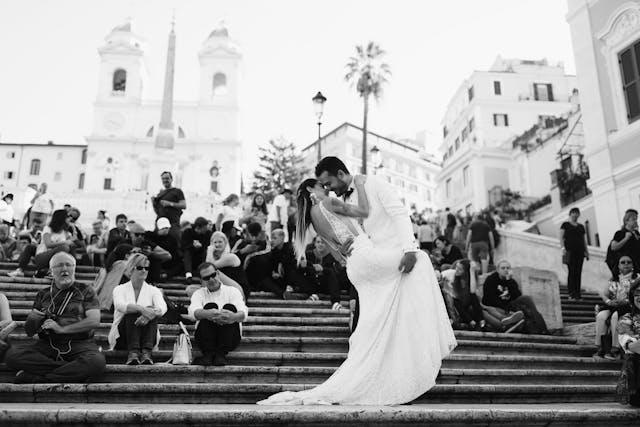
The Nuptial Blessing is another unique element, a prayer asking for divine guidance, protection, and perhaps a little patience. It feels like a warm moment even for guests who wouldn’t normally call themselves religious.
The Do’s and Don’ts of Italian Nuptials
If you’re planning on attending an Italian wedding, there are a few etiquette rules you should know. First off, don’t even think about wearing white. That’s the bride’s color, and if you show up in a white dress, you might as well have “home wrecker” tattooed on your forehead.
So, what colors are acceptable? Italians love vibrant hues, so don’t be afraid to go bold. Rich jewel tones like emerald green, sapphire blue, or deep purple are always a hit. For the gents, a well-tailored suit in navy or charcoal is a safe bet. Just remember, the goal is to look good, not outshine the bride.
Secondly, be prepared to party. Italian weddings are marathons, not sprints. Pace yourself with the wine, or you’ll be face-down in the tiramisu before the first dance.
And speaking of food, don’t you dare refuse anything. Each course is like a small novel, with its own characters, plot twists, and dramatic climax. Turning down a dish is like walking out halfway through “The Godfather.” It’s just not done.
Italian wedding feasts are legendary, and for good reason. You’ll typically start with an aperitivo, featuring prosecco and light snacks. Then comes the antipasti, which might include prosciutto, various cheeses, and marinated vegetables. The primo piatto is usually pasta – perhaps orecchiette with broccoli rabe in the south, or risotto alla Milanese in the north. The secondo is typically meat or fish, like osso buco or branzino. And don’t forget the wedding cake, often a millefoglie, layers of puff pastry filled with cream and fruit. In some parts of Italy, they serve “La Torta degli Sposi,” a two-tier cake that the couple must cut together using a special double-handled knife, symbolizing their first joint task as a married couple.
Lastly, bring cash. Many Italian weddings have a “busta,” an envelope where guests can contribute money to the newlyweds. It’s like a GoFundMe, but with more prosecco and less guilt-tripping on social media. As for the amount, it’s generally expected to at least cover the cost of your meal. For close friends or family, €100-€200 per person is common. For more distant relations or colleagues, €50-€100 is acceptable. Remember, it’s the thought that counts, but a hefty envelope counts even more.
It’s generally expected that you’ll bring your own envelope. No need for anything fancy – a simple white envelope will do. Some couples might provide envelopes at the reception, but it’s always safe to bring your own. Just make sure it’s sealed and has the names of the gifters written on it. And remember, cash is king in this situation. No need to overthink it with cheques or gift cards.
Celebrities Say “I Do” in Italia
Italy has become a magnet for celebrity weddings, partly because its landscapes seem to whisper romance at every turn.
Take Tom Cruise and Katie Holmes, for instance. They tied the knot at Odescalchi Castle in Bracciano, near Rome, in 2006. This 15th-century fortress overlooking Lake Bracciano isn’t just any old castle. It’s hosted popes, kings, and now, Hollywood royalty. The castle’s imposing walls and stunning lake views provided the perfect backdrop for a fairytale wedding. Well, a fairytale with a rather short “happily ever after,” but that’s showbiz for you.
Then there’s Kourtney Kardashian and Travis Barker, who had their final blowout wedding at Castello Brown in Portofino. This 16th-century fortress turned museum offers panoramic views of the Ligurian Sea. It’s the perfect spot for a rock star and a reality TV queen to say “I do” – high above the common folk, with plenty of Instagram-worthy backdrops.
Lady Kitty Spencer and Michael Lewis chose Villa Aldobrandini in Frascati for their nuptials. This 16th-century villa is a masterpiece of Italian baroque architecture, complete with cascading gardens and fountains. It’s the kind of place that makes you feel like you’ve stepped into a Renaissance painting. Perfect for a fashion model marrying into high society.
George Clooney and Amal Alamuddin opted for the Aman Canal Grande in Venice. This 16th-century palazzo on the Grand Canal is so exclusive, it makes other luxury hotels look like highway motels. With frescoed ceilings and a private garden, it’s the epitome of Venetian opulence. Because when you’re George Clooney, a regular hotel just won’t do.
John Legend and Chrissy Teigen chose Villa Pizzo on Lake Como. This stunning 16th-century villa boasts terraced gardens that cascade down to the lake. It’s so romantic, it probably inspired John to write a new love song on the spot.
Kim Kardashian and Kanye West took over Forte di Belvedere in Florence. This 16th-century fortress offers panoramic views of Florence and the surrounding Tuscan hills. It’s a location as dramatic and over-the-top as the couple themselves.
And let’s not forget Salma Hayek and François-Henri Pinault, who chose the Palazzo Grassi in Venice. This 18th-century palace on the Grand Canal is now a contemporary art museum. It’s a blend of historic architecture and modern art, much like the union of a Hollywood star and a French billionaire.
Wedding Venues to Explore
Say you’re planning your own Italian wedding extravaganza, you’ve got options ranging from “quaint countryside chapel” to “did you rob a bank to afford this?”
For the budget-conscious couple, consider the Agriturismo La Pieve in Tuscany. It’s a working farm that offers rustic charm without breaking the bank. You can say “I do” surrounded by olive groves and vineyards, then celebrate with farm-to-table cuisine. It’s like a wedding and a wine tasting tour rolled into one.
Moving up the price scale, we have Villa Cimbrone in Ravello. Perched on the Amalfi Coast, this 11th-century villa offers stunning sea views and lush gardens. It’s been a favorite of artists and intellectuals for centuries. Getting married here is like stepping into a painting, but with better catering.
For those with more champagne tastes (and budgets), there’s Villa d’Este on Lake Como. This 16th-century villa turned luxury hotel has hosted everyone from Alfred Hitchcock to Elizabeth Taylor. With its floating pool on the lake and Michelin-starred restaurant, it’s the kind of place that makes you feel like royalty. Just be prepared for a royal price tag to match.
And for those who’ve won the lottery or have a trust fund burning a hole in their pocket, there’s the Castello di Vincigliata in Florence. This medieval castle offers panoramic views of the city and the surrounding Tuscan countryside. With its stone walls, towers, and battlements, it’s like getting married in your very own Game of Thrones set. Minus the dragons and unfortunate wedding day massacres, of course.

Whether you’re a Hollywood A-lister or just a regular Joe looking to tie the knot, Italy offers a wedding experience that’s as rich and complex as a good bottle of Barolo. From the competitive log-sawing in Tuscany to the marathon feasts in the south, Italian weddings are a whirlwind of tradition, superstition, and carb-loading.
So, if you find yourself invited to an Italian wedding, remember: pace yourself with the prosecco, bring your stretchiest pants, and for the love of all that is holy, don’t wear white. Unless you’re the bride, in which case, go forth and conquer. Just watch out for those obstacle courses on the way to the church. Salute!